
Mastering the Handoff
Jul 14, 2026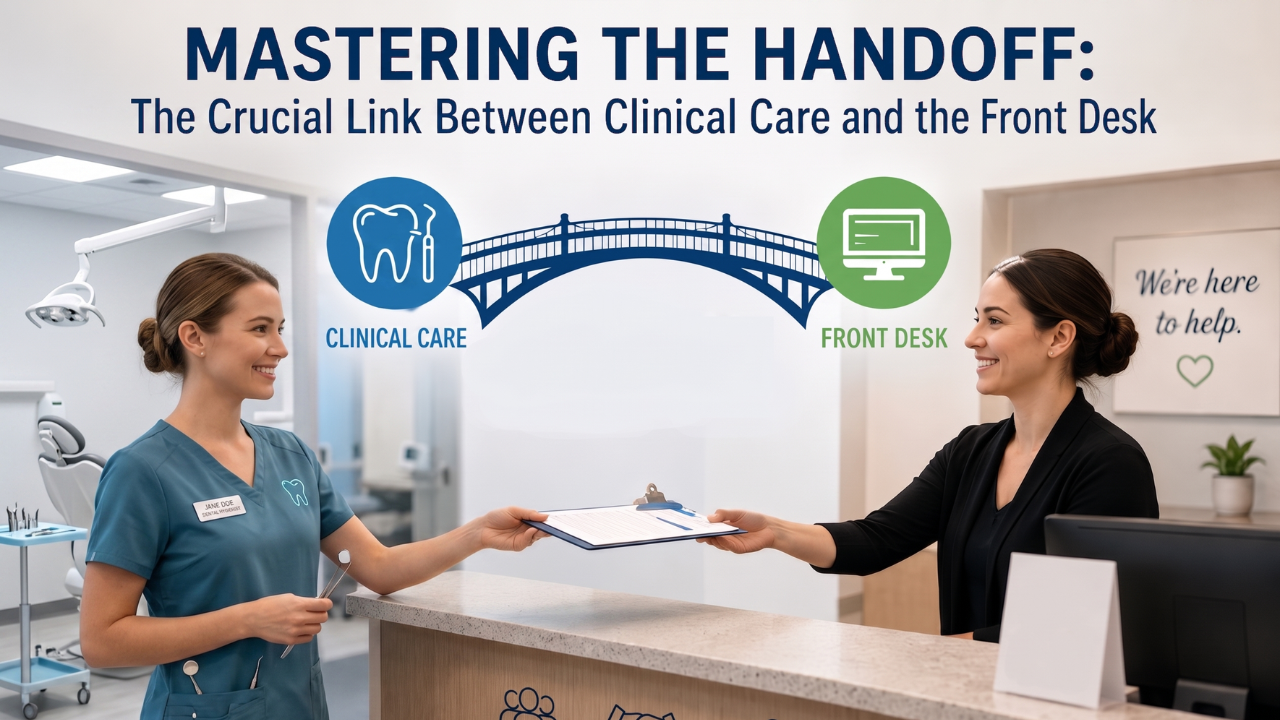
The Crucial Link Between Clinical Care and the Front Desk
In a busy dental practice, the most vulnerable moment of the patient journey isn't the procedure itself, it's the handoff. Imagine the patient’s experience: they have just spent an extended period leaning back in a chair, holding their mouth open, and processing complex information regarding their oral health.
They are likely feeling a profound mix of physical fatigue, immense relief that the procedure is finally complete, and a lingering sense of apprehension about what comes next. The transition from the clinical chair to the administrative checkout counter is where treatment plans are either solidified or lost.
This critical juncture acts as the ultimate bridge between clinical necessity and practical execution. If your clinical team and front desk operate as separate entities rather than a unified front, patients notice. They are incredibly perceptive and can sense the disconnect, tension, or lack of communication between departments immediately.
That hesitation and lack of confidence often translate directly into delayed care or canceled follow-ups. Confusion during this transition leads to unbooked restorative work, misunderstood insurance benefits, and ultimately, lower patient retention.
The Ripple Effect of a Fragmented Patient Experience
When a patient is sent to the front desk with nothing more than a routing slip and a vague "they will take care of you up front," the continuity of care is instantly broken. Consider a common scenario that plays out in practices every day: a patient needs a crown to save a cracked tooth.
The dentist meticulously explains the clinical urgency, and the patient agrees while in the chair. However, if the front desk team is unaware of this urgency and clumsily asks, "So, what are we scheduling you for today?" the perceived clinical value of that procedure has just plummeted.
The patient is suddenly forced to act as the primary communicator between your own internal departments. This disjointed experience breeds immediate distrust and anxiety. The patient begins questioning the necessity of the treatment and becomes hyper-focused on the financial cost rather than the long-term health benefits.
This dynamic predictably leads to the dreaded "let me think about it" response instead of a definitively booked appointment, creating a "leaky bucket" scenario where highly valuable production walks right out the front door, likely never to return.
The Anatomy of a Perfect Handoff
To bridge the gap between departments, your practice needs a standardized, collaborative handoff protocol. A handoff should never be left to chance, the current mood of the staff, or personal communication styles; it must be a repeatable, highly predictable, and professional system. Here is what a seamless transition looks like:
● The Clinical Recap: Before the patient leaves the chair, the doctor or hygienist summarizes what was accomplished today and exactly what needs to happen next. This ensures the patient understands the clinical value before money is ever discussed.
● The "Warm" Transfer: The clinical team member escorts the patient to the front desk and verbally passes the baton. (e.g., "Sarah, Mr. Davis did great today. We finished the deep cleaning on the right side, and Dr. Smith needs to see him back in two weeks to start the crown on tooth #19.")
● The Unified Front: The front desk team receives the information without having to ask the patient what they need. They can immediately pivot to scheduling and financial arrangements, reinforcing the doctor's recommendation with confidence.
Building the Habit: Implementing the Protocol Today
Knowing the procedural steps is only half the battle; building the organizational habit requires daily practice. Incorporating this system starts with an effective morning huddle. Teams should review the schedule comprehensively together, anticipating complex handoffs, financial hurdles, or anxious patients before the first person even walks through the front door.
Role-playing is another absolute critical tool for mastering this skill. Dedicate meaningful time during your next team meeting to physically walk through the handoff process in your actual office space.
Have a hygienist act as the patient, an assistant as the clinician, and an administrator at the desk. Practicing the verbiage aloud removes the initial awkwardness and helps the team naturally integrate these standardized scripts into their unique communication styles.
Moving From Echo Chambers to Synergy
Executing a perfect handoff requires your entire team to operate on the same wavelength. When front desk, clinical, and admin teams understand each other's workflows, you eliminate the friction that makes collaboration feel complicated. Synergy is not an accident; it is the direct result of intentional cross-training, deep mutual respect, and completely open communication.
Administrative team members should periodically shadow the clinical floor to truly understand the intense physical and emotional demands placed on hygienists, assistants, and doctors throughout the day. Conversely, clinical staff must understand the complex, ever-changing intricacies of insurance verification, billing cycles, and schedule optimization.
When everyone grasps the full picture, assigning blame is instantly replaced by mutual support. Empowering every member of your team to lead with purpose and clarity transforms your daily operations from chaotic to seamless.
Sign up for weekly knowledge drops from COLLABricon
We hate SPAM. We will never sell your information, for any reason.